
Windscreen Cost & Insurance
What Decides the Cost of ADAS Calibration?
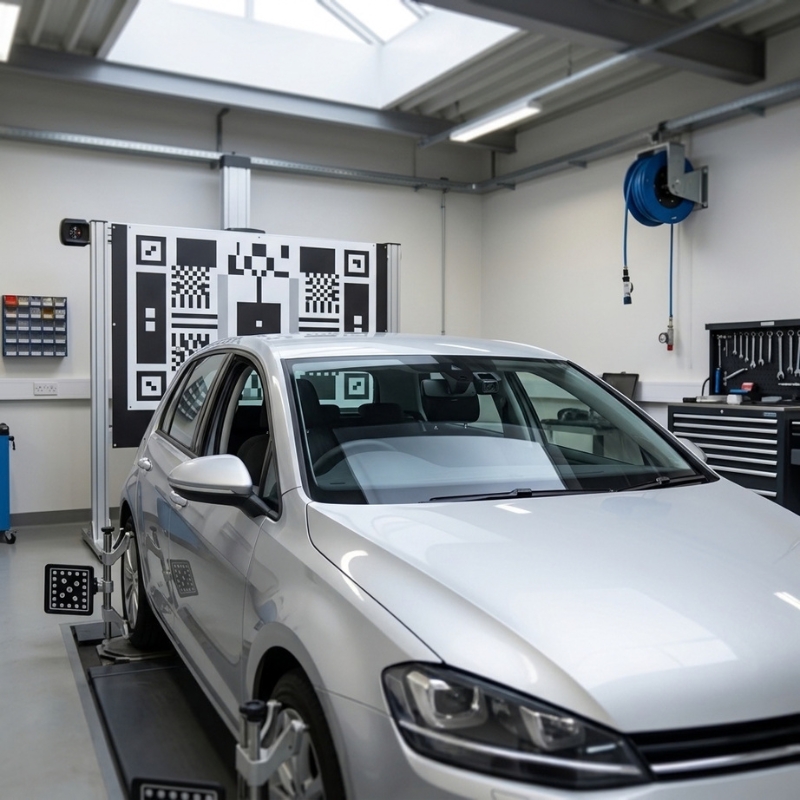
ADAS calibration cost is driven by five things: which systems your car has, whether it needs static calibration in a controlled bay or dynamic calibration on the road, how many targets and how much setup the make requires, whether it is done with the replacement or as a second visit, and whether the first attempt passes.
If calibration has turned up on a quote and you suspect it is padding, it is not. The camera that runs your lane keeping and automatic braking looks through the windscreen, so the moment the glass is moved, the camera moves with it and has to be re-aimed. At Windscreen Replacers we arrange that calibration as part of a windscreen replacement across Sydney, and we are asked about the cost often enough that it is worth explaining properly. This article covers what the job actually involves, the five things that move the number, and the two calibration methods and why one costs more than the other. There are no dollar figures here, because the number depends entirely on your car.
Why a windscreen replacement triggers calibration at all
Calibration is triggered because the camera that your driver assistance systems depend on is bonded to the glass. The forward-facing camera behind the mirror aims the lot: lane keeping, lane departure warning, forward collision warning, automatic emergency braking, and on some vehicles adaptive cruise control. All of them read the road through that one camera. A fraction of a degree of change in its angle moves where the car believes the lane marking sits by a surprising distance at a hundred metres down the road, so a camera that is even slightly off acts on the wrong information. This is why recalibration after the glass is moved is a vehicle manufacturer requirement set out in their own service procedures, not a workshop preference or an optional extra. There is more on the mechanism in our explainer on why your car needs calibration after a replacement.
What actually happens during a calibration
A calibration is mostly careful setup, and seeing the sequence explains where the cost sits.
- The vehicle is set on a level surface at a precisely measured distance from the target.
- Ride height and tyre pressures are checked, because both change the camera's angle to the road.
- Fuel level and load are accounted for on some makes, since they tilt the car slightly.
- The target board is positioned to the manufacturer's exact measurements.
- The system is put into calibration mode with a diagnostic scan tool.
- The result is verified before the car is handed back.
The ride height, tyre pressure and load conditions are not a technician's choice, they are specified in the manufacturers' own service procedures for the exact reason above. The thing worth understanding is where the money goes: most of the cost is the setup, the controlled space, and the equipment standing idle in that space, not the few minutes the scan tool is actually connected. You are paying for the bay and the precision, not the button press.
Static and dynamic calibration, and why they are not interchangeable
There are two calibration methods, and a car needs the one its manufacturer specifies rather than the one that happens to be convenient.
| Method | Where it happens | What it needs | Why it affects the number |
|---|---|---|---|
| Static | A controlled workshop bay | A level floor, measured target placement, controlled lighting | Needs dedicated space and target equipment held ready for the job |
| Dynamic | On the road | A drive at a sustained speed on clearly marked roads in suitable weather | Needs a technician and a suitable road for a sustained period |
| Both required | Bay first, then the road | A full static procedure followed by a dynamic confirmation drive | Needs each of the above, so it carries the demands of both |
Static calibration happens in a bay because it depends on target boards placed to the millimetre under steady lighting, which can only be controlled indoors. Dynamic calibration is done by driving the car so the camera learns the road live, which needs clear markings and a steady speed. Some makes specify a static procedure followed by a dynamic confirmation, and when they do, both have to be completed for the car to pass. The method is set by the make, so it is not a lever anyone can pull to make the job cheaper.
Why rain in Sydney can postpone a dynamic calibration
A dynamic calibration needs the camera to see clearly marked lanes at a sustained speed, so Sydney weather genuinely gets in the way. Heavy rain, faded or missing lane markings, or stop-start traffic will all stop the drive completing, and the calibration then has to be repeated when conditions allow. If your calibration slips to another day for this reason, it is not a delay tactic. The system has to actually see the road to learn it, and a wet motorway with poor visibility does not give it enough to work with.
The five things that move the number
Five things decide where a calibration lands, and none of them is the supplier's margin.
- Which driver assistance systems your car has
- Whether it needs static, dynamic or both
- How much setup the make specifies
- Whether it is done with the replacement or as a separate visit
- Whether the first attempt passes
First, the systems. A car with a single forward camera is a simpler job than one carrying a camera plus radar plus a surround-view system, because each system that reads the road is another thing to bring back within tolerance. Second, the method, as above: static, dynamic or both, with both carrying the demands of each. Third, the setup the make specifies, since some manufacturers require several target boards and a long measured floor layout while others need far less. Fourth, whether it is handled as part of the replacement or booked separately, because a second visit means a second full setup from scratch. Fifth, whether it passes first time, because a car with a pre-existing fault, a non-standard windscreen already fitted, or suspension or wheel alignment outside specification will fail calibration until that underlying issue is put right.
Why an aftermarket screen can fail a calibration
The camera does not look through just any part of the glass, it looks through a specific optical area. A screen whose camera bracket sits in a slightly different position, or whose optical quality in that exact area is not up to the original, will not let the system calibrate within tolerance, and the calibration fails even though the glass looks perfect. This is one of the practical reasons the glass specification matters far more on a camera car than an older one. Getting the right screen for the vehicle is part of what makes a complete, calibration-ready job, which feeds directly into what a proper quote should contain.
Done with the replacement, or as a second appointment
Calibration is handled one of two ways: arranged as part of the replacement so the car is released to you once, or booked as a separate appointment afterwards. The case for doing it together is straightforward and worth stating without overclaiming: one setup rather than two, one release rather than two, and the car is never driven uncalibrated in the gap between. A quote that leaves calibration off a camera car is not the cheaper quote, it is the incomplete one, and the gap reappears as a second bill later. A complete quote accounts for the glass, the fit and the calibration together, which is part of understanding what a windscreen replacement costs in Sydney on a modern car. Ask whether calibration is included and which method your make requires.
What to ask before you accept a quote
A few questions tell you quickly whether a quote is complete and whether the calibration is being handled properly.
- Ask whether your car has a camera behind the glass at all, since not every car needs calibration.
- Ask whether your make requires static calibration, dynamic calibration, or both.
- Ask whether calibration is included in the quoted work or billed as a separate line.
- Ask whether the glass being fitted is specified for a camera vehicle.
- Ask for the calibration result to be confirmed before the car is handed back.
Frequently asked questions
Do I need ADAS calibration after a windscreen replacement?
If your car has a forward-facing camera behind the glass, yes. Moving the glass moves the camera, and the vehicle manufacturer requires it to be recalibrated before the lane keeping and automatic braking systems can be relied on again.
What is the difference between static and dynamic calibration?
Static calibration uses measured target boards in a controlled workshop bay. Dynamic calibration uses a road drive at a sustained speed on clearly marked roads. Some makes require a static procedure first, followed by a dynamic confirmation drive, before the car passes.
Why does ADAS calibration cost more on some cars?
More assistance systems to bring into tolerance, more target boards, a longer measured setup, or a make that requires both methods will all raise it. A second, separate visit also means paying for a second full setup rather than one.
Can calibration be done at my home or workplace?
A dynamic calibration can be completed on a suitable road after a mobile fit. A static procedure cannot, because it needs a controlled bay with a level floor, steady lighting and target boards placed to precise measurements that a driveway cannot provide.
What happens if calibration is skipped?
The assistance systems keep operating but aim from the wrong reference point, so lane keeping and automatic braking read the road inaccurately and may act on it. The car may also log a fault for the uncalibrated system.
Calibration is part of the job, not an add-on
Calibration is not an add-on to argue over, it is part of the work on any car with a camera behind the glass. What moves the number is your car and the method it needs, not the supplier you choose, so the quote to trust is the one that accounts for it rather than the one that leaves it off. Tell us your make, model and build year and we will tell you whether your car needs calibration, which method it takes, and arrange it as part of your windscreen replacement in Sydney so the car is only off the road once.